More than 400 universities, over 20,000 degree programs, almost no tuition fees. Sounds great. But: Will your qualification be recognized? Do you need a Studienkolleg? Which university fits you? We help you filter the right answer out of the noise.
No template, no generic guide. A conversation with Felicia, then your Personal Germany Plan within 3 business days.
The wrong degree costs you a year of your life. A consultation costs you an afternoon.
The wrong subject, the wrong type of institution, or the wrong Studienkolleg: you only notice after two semesters. By then your semester fees, your living costs, and a year of your life are gone, and your visa depends on your academic progress. Switching or dropping out costs you many times what a one-time consultation costs. That's exactly why we exist.
Fill out the questionnaire. We analyze your profile and send you your Personal Germany Plan within 3 business days. No call needed.

I live in Germany, I know the system from the inside, and I build your personal plan. Direct, honest, no detours.
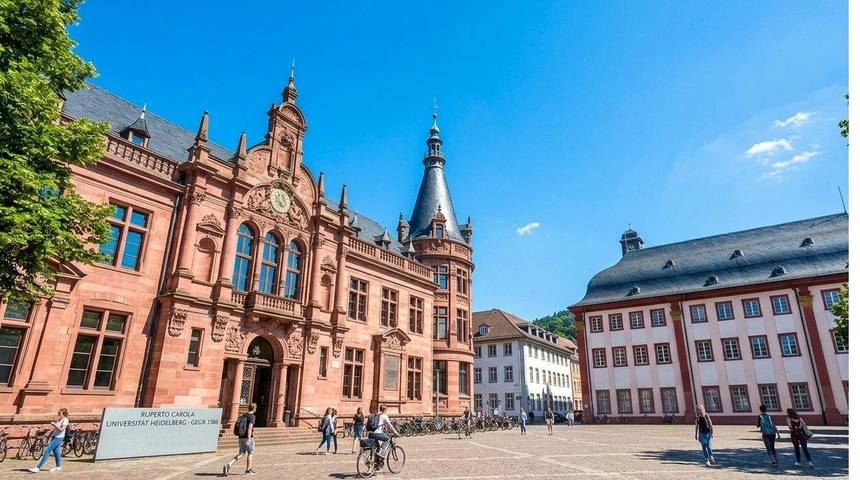
Germany is one of the most popular study destinations in the world, and there are solid reasons for it. At public universities in most federal states, you pay no tuition at all, just a semester fee of roughly € 150 to € 430 (as of 2026). That fee often includes a public transit pass.
On top of that: more than 400 universities with over 20,000 degree programs. Hands-on, internationally recognized, with a direct line into German industry. No surprise that international students have long treated Germany as a first choice.
One thing up front: There's no single, uniform system. What applies to you depends on your home country, your qualification, and the specific university. That's exactly why a personal consultation pays off.
Before you apply anywhere, you need to know how your qualification gets classified in Germany. That comes down to two things: your home country, and whether this is about your school leaving certificate for a bachelor's degree or a completed university degree for a master's. For many countries, the anabin database run by the Central Office for Foreign Education (ZAB) gives you a first orientation. But be careful: anabin doesn't cover every country and every qualification. If your case isn't listed there, anabin doesn't decide, the responsible authority in Germany does. Depending on your home country and your qualification, your path looks different.
This is exactly where we come in. Which of the two cases below applies to you varies from country to country and from qualification to qualification, and that's precisely where most people lose time. We tell you where you stand, show you the right place to go, and help with the question many underestimate: university or Fachhochschule. In short: we pull you out of the jungle of portals, deadlines, and jurisdictions so you know what to do next.
For many home countries, anabin lists how your school certificate is classified under “school qualifications with university access.” Two paths are possible:
Depending on the country, direct access may also require proof of prior university study from your home country. If your certificate isn't listed in anabin, you need an individual assessment from the responsible authority in Germany for your visa.
If you've already studied, you check two things in anabin, and both have to line up:
If both line up, the formal requirements are met, and your target university reviews the academic content. If your degree is missing from anabin, you apply for a Statement of Comparability from the ZAB: around € 208, up to 3 months (as of 2026).
Applicants from India, China, and Vietnam: You also need the APS certificate. No APS means no admission and no visa. APS verifies that your certificates are genuine. Cost in India: around € 225, roughly 18,000 INR (as of 2026). China and Vietnam differ. Processing time: often 4 to 10 weeks, longer if they have to follow up with your university. Start early, ideally in parallel with your application. New for India: If you're applying for a master's from the summer semester 2027 onward and your bachelor's is in engineering, business, finance, or management, the Digital Master Test (dMAT) applies on top. What counts is the degree you already hold, not the master's you want. Anyone who completed their APS registration before June 29, 2026 is exempt.
The type of program you choose determines not just what you learn, but how you apply, how long you study, and what your career start looks like afterward.
Applying through uni-assist: Many universities process international applications through uni-assist. Standard deadlines: winter semester by July 15, summer semester by January 15. Many programs close earlier, so always check your specific program. Processing fee: € 75 for your first program choice, € 30 for each additional one (as of 2026). It's counted per program choice, not per university. So three programs cost you € 135, even at the same university.
Start early: you need to show € 11,904 for your first year (€ 992 per month, as of 2026). As an applicant without a confirmed place, it's € 1,091 per month. Fintiba or Expatrio. Takes 2 to 3 weeks.
No admission, no visa. Watch the deadlines: winter semester by July 15.
Wait time: 6 to 14 weeks. Submit complete documents. Book your appointment early.
Register at the residents' office within 14 days, take out health insurance, enroll.
EU citizens: Most of this doesn't apply to you. You can enter and apply directly. This page is aimed mainly at applicants from countries outside the EU.
Dual study program: The route is different. Here you don't apply to the university first, you apply to the company. Without a signed contract with an employer, you can't even enroll. In return, you get paid from month one and you already work in your field while you study. The catch: places are fiercely contested, many companies recruit up to a year ahead, and the teaching is almost always in German. Without solid German, this route isn't realistically doable. The visa also depends on how your specific dual program is structured. These are exactly the cases we go through with you one on one.
This is exactly where Jump2Germany helps: We build your personal timeline and show you which university fits your profile. That one question alone has three answers in Germany: university, Fachhochschule, or dual study program. Each has its own entry requirements, its own application route, and leads to a different career start. On top of that, you get concrete application tips for a process that works differently than in your home country. We know both sides and give you your clear recommendation, instead of leaving you alone with a list.
More info: DAAD, anabin, and uni-assist. All information without warranty. As of 2026.
Most people hear “Studienkolleg” and immediately think: that costs an extra year. True. But it's the official system. At the end, you're standing on the same starting line as everyone else.
One year of intensive preparation, then the Feststellungsprüfung assessment exam, then you apply like everyone else. You have two options:
The expensive mistake almost nobody knows about: Not every private Studienkolleg is allowed to administer the Feststellungsprüfung itself. The DAAD is clear about it: public Studienkollegs guarantee a state-recognized qualification, while among private ones only a handful of providers can. Watch the difference between “staatlich genehmigt” (state-approved) and “staatlich anerkannt” (state-recognized). If your Studienkolleg is only approved, you have to sit the exam externally at a public Studienkolleg, compete for very few seats, and your course grades don't count toward it. A year of your life and several thousand euros hang on this one question.
Which route and which course type fits you? T-course for engineering and natural sciences, W-course for business, G-course for humanities, M-course for medicine. Public or private, German or English track: this is exactly where we help you choose, with a clear recommendation, the right contacts, and application tips. On request, you get a side-by-side comparison of the private Studienkollegs with their advantages, disadvantages, and recognition status.
The plan doesn't end with your admission letter. Housing, finances, insurance, daily life: the part everyone else leaves out is what decides whether your start goes well. And a lot of it depends on your situation.
Where you can realistically search from home, and how not to fall for scammers.
How many days per year you're allowed, and what puts your residence permit at risk.
Which insurance is mandatory, and the order you handle everything in.
The first steps nobody else explains to you.
Here's what we do for you: We give you the right order and specific contacts for your start, matched to your city and your situation.
We sort out your qualification, check whether you need a Studienkolleg, find universities that fit, and build your personal timeline.