GIVE BACK. EXPERIENCE. GROW.

Give a year.
And arrive while you do.

You want to come to Germany, learn German, and do something meaningful at the same time? A volunteer service makes exactly that possible. But only if you go about it the right way does it actually take you somewhere.

Confidential & Secure No subscription Based in Germany
Based on official sourcesBundesagentur für ArbeitGoethe-InstitutBAMFAs of 2026
Does this sound like you?

You want to do something meaningful and get to know Germany while you do it

“I want to help and learn the language while I do it.”

That's exactly what a volunteer service is. You work at a social institution, pick up German in everyday life, and have time for language courses. A year that moves you forward.

Question about getting started
“Can I stay in Germany afterward?”

Yes. If you come out of a volunteer service with B1 or B2 German, you can apply for Ausbildung positions. A volunteer service is not an immigration route. But it's a real springboard.

Question about staying
“What's the difference between FSJ, BFD, and the rest?”

There are several programs with different requirements, age limits, and visa routes. Check directly with the official organizations which program fits you. Overview of the programs →

Question about the different services
What actually applies

Volunteer service in Germany: The facts that matter most

You work at an institution in the social, environmental, or cultural sector. You get pocket money, accommodation, and health insurance. Not a regular job, but a real experience.

  • Programs: FSJ, BFD, weltwaerts, European Solidarity Corps
  • Pocket money: € 250 to € 450 per month (as of 2026), depending on the program and the organization. As a rule, the pocket money isn't enough to rent an apartment in Germany. bundesfreiwilligendienst.de →
  • Duration: Usually 12 months
  • Fields: Nursing, childcare, environment, culture, sport, heritage conservation
  • Accommodation: Provided or subsidized by the organization
  • Health insurance: Included for the duration of your service

Honestly: A volunteer service is not a direct route to permanent immigration. It is a springboard. Put in a motivated year, learn German, and plan your next step early, and you come out of it in a far stronger position.

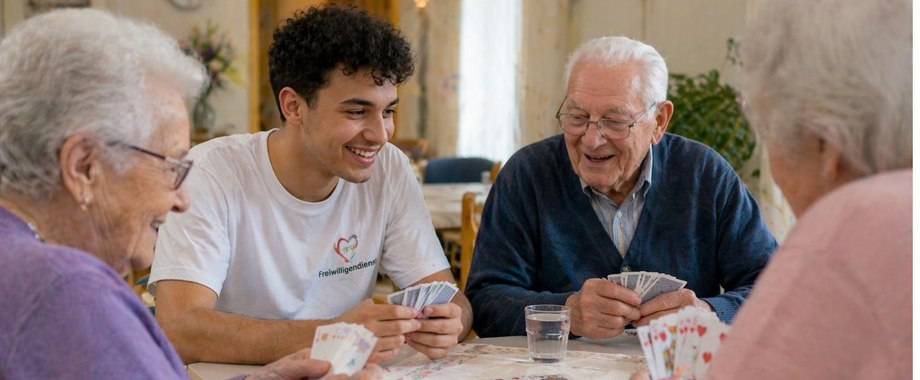
A volunteer at a kindergarten A volunteer playing cards with older residents
Practical tips that matter

Accommodation decides your visa.

Without secured accommodation, you get no visa. Look specifically for organizations that provide free housing: hospitals, care homes, and facilities for people with disabilities often have their own rooms for volunteers. Those spots are in high demand. Start early.

The organization provides your health insurance.

This is settled by law: your organization is required to insure you for the duration of your volunteer service. You don't have to arrange it yourself.

Applying from inside Germany is easier.

This comes from many conversations with organizations: if you're already in Germany, for example after an au pair year, you have a real advantage when applying. The visa process from abroad is laborious, and many places get filled at very short notice. Most programs start in September. Applying a year ahead isn't unusual.

Step by step

How to find a place and make the year count

5 steps to your volunteer placement. Plan early and think backward: When do you want to start?

1

Choose an organization and a placement

Caritas, Diakonie, AWO, the German Red Cross, NABU, and many others place volunteers. Many positions are filled 6 to 12 months before the start. List of organizations →

2

Application and volunteer contract

You apply directly to the placement or through the organization. With the contract in hand, you then apply for your visa at the German embassy.

3

Arrival and registration

After you arrive, you register at the residents' office. Your organization helps you with this.

4

Learn German alongside

You're entitled to education days. Use them for German courses. B1 by the end of the year is realistic if you practice consistently.

5

Plan your next step early

Start from month 6: apply for Ausbildung positions, gather your certificates, sit your language exam. Wait, and you miss the best places.

Felicia, coach, teacher and entrepreneur
Your consultant
Felicia, coach, teacher and entrepreneur

I live in Germany, I know the system from the inside, and I've worked abroad myself.

Get to know me, free
What fits next

What's possible for you after a volunteer service

Ausbildung in Germany

With B1 and a volunteer service reference, your chances are good. In nursing, social work, and many other fields, applicants with hands-on experience are in demand.

Go to the Ausbildung page

Studying in Germany

With B2 or C1 and a recognized qualification, a degree after your volunteer service is realistic too. We look together at what specifically applies to you.

Go to the study page

Coming to Germany as a skilled worker

You already have a qualification and used the volunteer service to improve your German and get to know Germany? Then the direct skilled worker route is your next step.

Go to the skilled worker page

Learning German: Which course?

Not at the level you need yet? On the German language page we explain which courses and certificates matter for an Ausbildung, a degree, and skilled work, and how to get there fastest.

Go to Learn German
Jump2Germany